
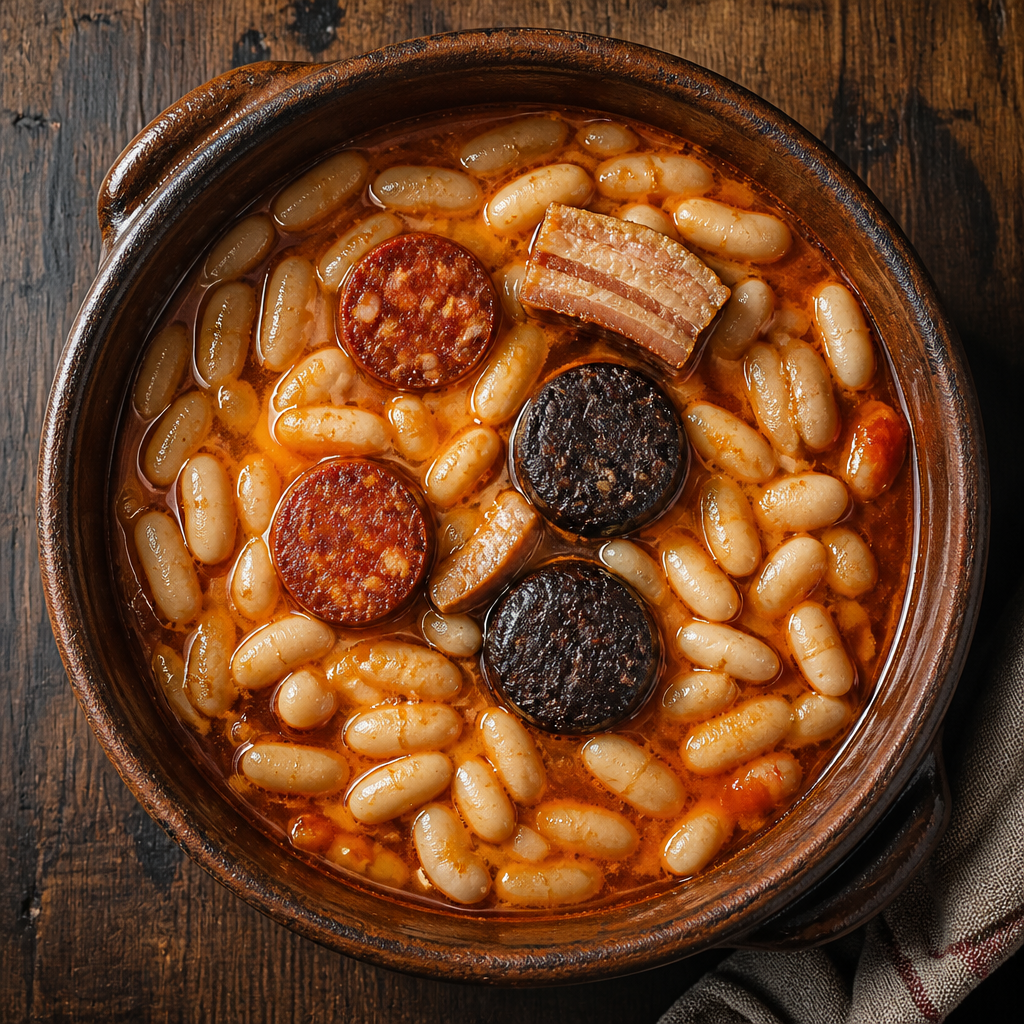
Traditional Asturian Fabada
shared by Nibblore Español
This hearty Asturian bean stew combines tender, creamy fabes with chorizo, blood sausage and cured pork belly in a rich, smoky broth. Slow, gentle cooking keeps the beans intact, while brief additions of cold water help them cook evenly. It is ideal for a winter lunch and tastes even better after a short rest. • Use recently harvested fabes, as beans that have been stored for too long may remain hard even after prolonged cooking. • Maintain the gentlest possible simmer throughout; vigorous boiling can split the fabes and burst the blood sausage. • For a clean, balanced broth, skim it at the beginning and remove only the visible excess fat rather than all of it. • If the dish must remain gluten-free, check that the sausages and paprika are certified gluten-free. • If Asturian fabes are unavailable, use large, thin-skinned white beans; the cooking time may vary by 20–40 minutes. • The cured pork belly can be replaced with the same amount of salt-cured pork shoulder, soaked for 8–12 hours to remove excess salt. • If saffron is unavailable, omit it; do not replace it with food colouring, which will not provide the same aroma. • Outside Asturias, use good-quality cured, smoked chorizo and blood sausage, avoiding fresh or excessively spicy varieties. Cool the fabada quickly and refrigerate it in an airtight container for up to 3 days, preferably storing the sausages separately so they do not break apart. It can also be frozen for up to 2 months; thaw overnight in the refrigerator. Reheat over low heat for 10–15 minutes, adding a little water if the broth has thickened and shaking the pot by its handles instead of stirring.
- Total time
- 205 min
- Servings
- 6
- Difficulty
- Intermediate
Create a free account to keep this recipe in your own cookbook and find it again when it’s time to cook.
Save to my cookbook — freeIngredients
- 500 gdried Asturian fabes beans
- 2cured Asturian chorizos, about 100 g each
- 2Asturian blood sausages, about 100 g each
- 250 gcured pork belly, in one piece
- 1onion, peeled and halved
- 2 clovegarlic, peeled
- 1bay leaf
- 0.15 gsaffron threads
- 1 tspsweet paprika
- 15 mlextra virgin olive oil
- 1.8 lcold water, approximately, plus more for soaking
- ½ tspfine salt, or to taste
Instructions
- 1The day before cooking, sort through the fabes and discard any damaged beans. Rinse them, place them in a large bowl and cover with at least three times their volume of cold water. Soak for 10–12 hours in a cool room.
- 2Drain the fabes without rinsing and place them in a wide, heavy-based 5–6 litre pot. Add the onion, garlic, bay leaf, pork belly, chorizos and 1.5 litres of cold water, or enough to cover everything by about 3 cm. Reserve the remaining 300 ml cold water.
- 3Heat the uncovered pot over medium heat until the liquid reaches a gentle simmer, about 15 minutes. Use a slotted spoon to skim off the foam and greyish fat from the surface. Reduce the heat to low so the liquid barely trembles and never boils vigorously.
- 4Cook for 60 minutes with the lid slightly ajar. Do not stir with a spoon or pierce the sausages; gently shake the pot by its handles every 20 minutes. On two occasions, whenever the broth begins to simmer more actively, pour 100 ml of the reserved cold water down the side of the pot to halt the simmer briefly.
- 5Toast the saffron threads in a dry frying pan over low heat for 20 seconds. Transfer them to a bowl, crumble them and mix with the paprika, olive oil and 50 ml hot broth from the pot. Add this mixture to the fabada after the first hour, pouring it down one side and gently rocking the pot to distribute it.
- 6Continue cooking over low heat for 75–105 minutes with the lid slightly ajar. Add small amounts of the remaining cold water if the fabes are no longer just covered. Begin checking them after 135 minutes of total cooking time; they are ready when creamy and tender at the centre, with their skins still intact.
- 7Carefully remove the onion, garlic and bay leaf. Taste the broth and add the salt only now, as the sausages and pork belly already contribute salt. If the broth is too thin, mash 6–8 fabes against the side of the pot, incorporate them by gently rocking the pot and cook for 10 minutes more; the broth should be velvety, not thick like a purée.
- 8Turn off the heat, cover and leave the fabada to rest for 20 minutes. Remove the chorizo, blood sausage and pork belly, then cut them into thick portions with a sharp knife. Divide the fabes and broth among deep bowls, arrange the meats on top and serve piping hot.